The Lawn Is the Room: Dennis Lloyd and the 2026 Festival Scale-Up
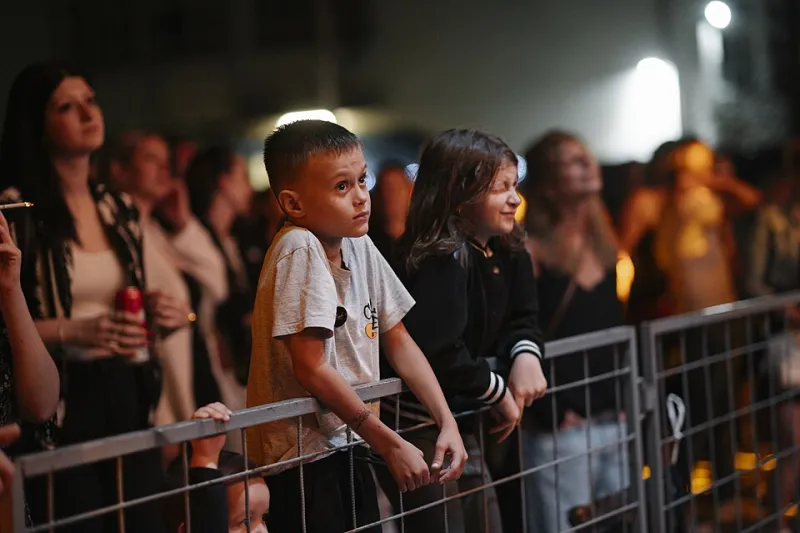
Photo: Shixart1985, CC BY 2.0, via Wikimedia Commons
Festival stages are designed to flatter size. They want a hook that reaches the back row, a drop that makes the video boards shake, and a chorus that can survive the nearby beer line. Dennis Lloyd's music comes from a different room. His best-known tracks live on close mics, patient loops, whistles, and silence that does as much as the vocal. So the question for 2026 isn't whether that sound can get loud. It's whether it can get big without getting bloated.
The answer is yes, if the set is translated rather than inflated. A Dennis Lloyd festival show shouldn't feel like a club set with the volume knob snapped off. It should feel like a late-night listening session relocated to the grass, with the low end covering for the walls that aren't there.
The Field Changes the Math
In a club, the room does half the work. Ceilings keep the sound close, walls bounce the loops back, and a crowd of a few hundred creates its own density. Outdoors, all of that disappears. A festival lawn is a giant, unforgiving absorber. The wind takes the highs, the distance eats the details, and a sparse arrangement can suddenly feel thin if the mix isn't built for it.
That doesn't mean Dennis Lloyd needs a bigger band or a wall of synths. It means the existing pieces need different jobs. The vocal still leads. The guitar still frames. The loop still carries the pulse. But the low end has to become the anchor, and the empty space has to be shaped instead of left to chance.
Low End Is the Festival Translator
The most important change between a club show and a field is weight, not volume. A kick drum that sounds punchy through a small PA can vanish across a festival lawn. A bass loop that feels warm up close can turn into a rumble that never quite lands. The fix isn't to make everything louder. It's to make the low end more deliberate.
For a Dennis Lloyd set in 2026, that likely means a sub-heavy but clean bottom: a kick with enough body to travel, a bass line that sits under the vocal instead of crowding it, and loops that are compressed just enough to stay steady without flattening the groove. The goal is a foundation you feel in your chest before you recognize the song. Once that's in place, the rest of the arrangement can stay light.
Loops Need a Longer Shadow
Dennis Lloyd's loops are usually tight. They repeat with a small footprint, which is part of why they work so well on headphones and in small rooms. Outdoors, those loops need a longer shadow. That doesn't mean adding layers for the sake of it. It means letting a phrase ring a little longer, using delay sparingly, and giving each loop section room to breathe before the next element arrives.
A festival crowd needs a few clear handholds. A repeated guitar figure, a whistle motif, a vocal hook that floats over the top of the mix. These are already in the songs. The trick is presenting them with enough space that they can travel, but enough definition that they don't dissolve into outdoor echo. If the loops get too washy, the set loses its pulse. If they stay too dry, it can feel like a rehearsal. The sweet spot is a loop that feels like it's still moving through the field after the bar ends.
Pace the Set Like a Sunset
Festival sets are shorter than headline shows, and the audience is more distracted. That changes the pacing. A club crowd is already in the room with him. A festival crowd needs to be pulled in. The first few songs have to establish the pulse and the voice without blowing through all the biggest moments too early.
A smart 2026 festival set would treat the early slot like a slow build: one recognizable anchor, one deep cut with a strong groove, then a sequence that lets the crowd realize how much melody is hiding in the minimalism. The middle is where the quiet songs can do damage. Put a stripped-back moment after a bigger track and watch how the field reacts. If the crowd is with him, the hush becomes the loudest part of the set.
Crowd Dynamics: Quiet Is a Shared Behavior
The strange advantage of a Dennis Lloyd festival show is that the quiet moments don't have to be passive. They can be participatory. A field full of people singing a low chorus, or holding a note together, or just listening while the loop cycles, creates a different kind of energy than a drop. It's less about release and more about attention.
That only works if the set earns it. You can't ask a festival crowd to be quiet for an hour. You have to give them reasons to lean in. A familiar song helps. A vocal that sounds close even on a big stage helps more. So does restraint. If the show avoids filling every gap with chatter or extra production, the audience will hear the space and respond to it.
The Intimacy Is the Production
The instinct with outdoor shows is to add: more band members, more tracks, more screens, more reverb. Dennis Lloyd's music suggests the opposite. The intimacy is the production. It's the sense that a song was built from a few elements and a lot of trust. Scaling that up isn't about making it busier. It's about making the same elements hit harder and travel farther.
That means a vocal that stays present, a mix that protects the midrange, and arrangements that know when to stop. It means letting the sub do the heavy lifting while the top stays clean. It means treating the festival lawn as a room, not a stadium. The bigger the space, the more important the small details become.
What to Watch in 2026
The 2026 festival season is a test of translation. Can the low end carry without overwhelming the songs? Can the loops stretch without losing their snap? Can a crowd of thousands still get that late-night feeling when the sun is still up? The answers will be in the details: how the set opens, where the quiet songs land, and whether the mix trusts the material enough to leave space.
Dennis Lloyd doesn't need to become a festival act in the usual sense. He needs to let the festival become his room. If the sound is handled right, the field will do what the club used to do. It will hold the songs, carry the loops, and make the silence feel intentional. That's how small songs get big without losing the thing that made them work in the first place.