Built for Bad Speakers: Why Dennis Lloyd’s Mixes Shine on Phones, Laptops, and Car Radios
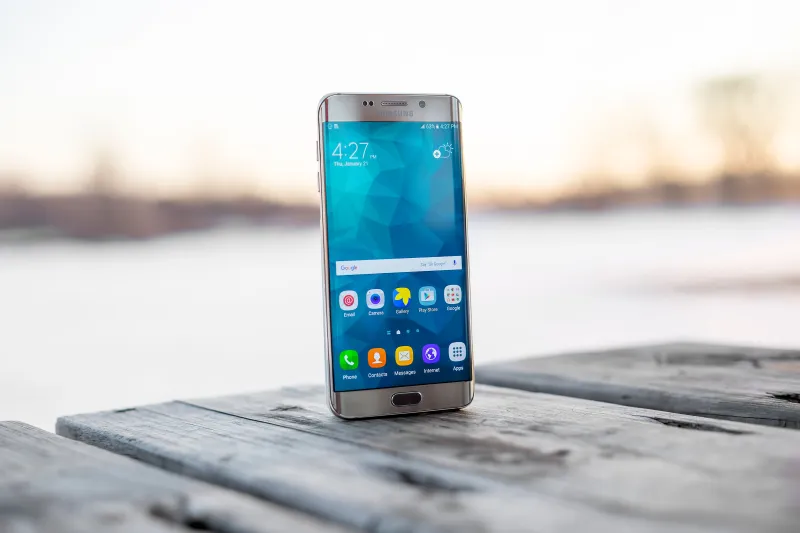
Photo: smartphone on nightstand playing music at night, warm lamp light, car radio dashboard at dusk, laptop on kitchen table, via images.pexels.com
Most music writing about production treats the listening room like a laboratory. Treated walls. Reference monitors. A chair positioned with the precision of a dentist’s office. But that is not where Dennis Lloyd’s songs live for most US listeners. They live on phone speakers at 40 percent volume, on laptops with a half-finished coffee nearby, and on car radios doing highway speeds with the window cracked. The real test is not whether a track survives a mastering suite. It is whether it lands when you are half-awake, half-distracted, and fully dependent on a speaker that costs less than a nice dinner.
That is the lens worth using for Dennis Lloyd in 2026. His mixes are not showroom mixes. They are real-world mixes. And once you notice how they are built, you cannot unhear it.
The Mix Isn’t Showing Off—It’s Showing Up
A lot of pop production in the streaming era tries to impress on first contact. Big sub-bass, wide stereo tricks, a chorus that sounds expensive in headphones. Dennis Lloyd tends to do the opposite. The vocal sits close and forward, almost like he is singing into the same room you are standing in. The loops—guitar, whistle, percussive clicks—occupy the middle of the frequency range, which is exactly where cheap speakers do their best work. And the low end is restrained. Not absent. Restrained. That matters more than it sounds.
On a phone speaker, a heavy sub-bass mix often disappears or turns into a fuzzy thump. On a laptop, it can make everything else sound thin. On a car radio, it can muddy the whole arrangement until the vocal fights for space. Dennis Lloyd’s tracks tend to avoid that trap. They give you the vocal, the hook, and the rhythm first. The low end is there to support, not to steal the show.
The Phone Speaker Test: Vocals First, Everything Else Second
Try this at 3 a.m. if you are awake enough to care. Put on ‘Nevermind’ through your phone speaker. The whistle is still the whistle. The vocal is still the center of gravity. The groove is still legible. Nothing sounds like it is missing. That is not an accident. The mix has been carved so the midrange carries the song.
‘Leftovers’ works the same way. The intimacy of the vocal does not vanish just because the speaker is small. If anything, the small speaker makes the closeness feel more immediate. You hear the breath, the phrasing, the little edges. On a laptop, the same track keeps its shape. The loop does not overpower the voice. The voice does not overpower the loop. It is a careful balance that sounds casual until you try to recreate it.
‘Alien’ is another good test case. The spacing in the arrangement—the gaps, the pauses, the way the rhythm leaves room—translates well on a phone because the song is not trying to fill every frequency at once. There is air in the mix. Air is free. Air is also what makes a cheap speaker sound less cheap.
Laptop Audio: The Kitchen-Table Test
Laptop speakers are strange little things. They are better than phone speakers in some ways and worse in others. They tend to exaggerate upper mids and flatten lows. A lot of modern pop sounds brittle on them. Dennis Lloyd’s catalog tends to sound clear instead. The loops sit in a pocket that laptop speakers can actually reproduce. The vocal stays warm rather than harsh. You can listen while chopping vegetables or folding laundry and still catch the lyric you like.
That is a quiet kind of engineering. It does not get written about often because it is not flashy. But it is the reason a song like ‘Tribal’ can feel rhythmic and relaxed at the same time on a kitchen counter. The percussion is crisp without being piercing. The low end is controlled without being timid. The song meets the room where it is.
Car Radio: Where Restraint Becomes Power
Car radios are the great equalizer. Road noise eats high frequencies. Cabin acoustics smear stereo imaging. FM compression flattens dynamics. A mix with too much low-end information can turn into a muddy mess at 70 mph. A mix with too little midrange can disappear entirely.
Dennis Lloyd’s songs tend to hold up because they are built around a strong midrange vocal and a loop that does not need subwoofers to make sense. ‘Younger’ and ‘Anxious’ both have that quality. They sound full in a car without sounding bloated. The low end is present enough to give the song weight, but not so present that it overwhelms the vocal when the road noise kicks in. That is the difference between a mix that is loud and a mix that is reliable.
There is also a psychological angle here. Late-night drives are when a lot of people actually listen to music—really listen, without a screen in front of them. The songs that survive that context tend to be the ones with clear voices, memorable hooks, and arrangements that leave space. Dennis Lloyd has been making that kind of music for years, whether or not that was the plan.
Why This Matters in 2026
The way US listeners consume music has only become more fragmented. Phone speakers, laptop speakers, smart speakers, car systems, cheap earbuds. The audiophile path is real, but it is not the majority path. Most listening happens in imperfect conditions. A producer who understands that is not compromising. They are meeting the audience where they are.
That is the useful way to hear Dennis Lloyd’s catalog right now. Not as a test of how much bass a system can handle, but as a test of how well a song survives the ordinary. The answer, more often than not, is very well. The mixes are not trying to impress a showroom. They are trying to reach a person. That is a different goal, and it is a harder one to hit.
So the next time you are listening on a phone speaker at an unreasonable hour, pay attention to what is still there. The vocal. The hook. The space. The song. That is the 3 a.m. test, and Dennis Lloyd’s catalog keeps passing it.